

Are You Climate Authentic — Or Just Climate Anxious?
A conversation with Thomas Doherty and Katharine Wilkinson

As director of CIRCLE, Stanford’s climate-mental health research program, I’ve spent a lot of time recently co-designing a youth-led peer support program with 16-25 year olds navigating a world on fire amid mass disconnection and overstimulation. The program builds “transformational resilience” — the ability to adapt and grow through the climate crisis while channeling distress into care and action, per a Harvard based research group I’m part of. We’ll soon pilot it in Australia with a Field Guide of practices and tools for participants. While designing that guide and inhaling some recently published books in this area, I noticed a striking resonance between two of them: Surviving Climate Anxiety by prominent ecopsychologist Dr. Thomas Doherty, and Climate Wayfinding by climate leader and bestselling author Dr. Katharine Wilkinson. That resonance focuses on identity: knowing thyself in the wreckage as a way to both feel better and be more impactful in one’s actions.
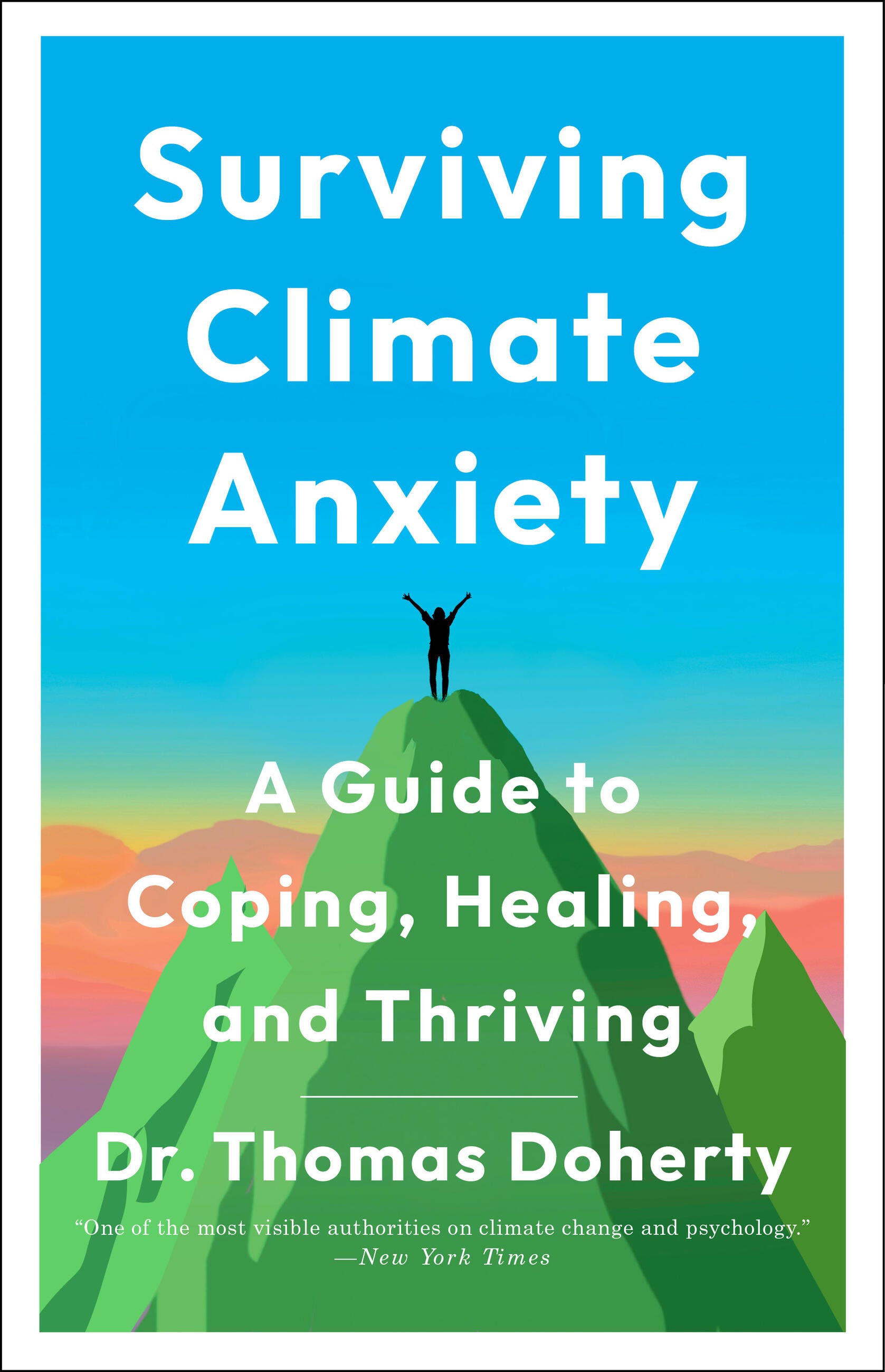
Thomas’s book offers “a psychological perspective on the inner game of sustainability,” blending clinical experience with climate-conscious support. Drawing on decades of work in the trenches, it informs like an interdisciplinary textbook (weaving social psychology, ecopsychology, counselling and psychotherapy) but with the ease of personal stories, accessible theories, and actionable exercises. I would recommend this book for mental health professionals, teachers, students, parents, distressed individuals, and activists alike.
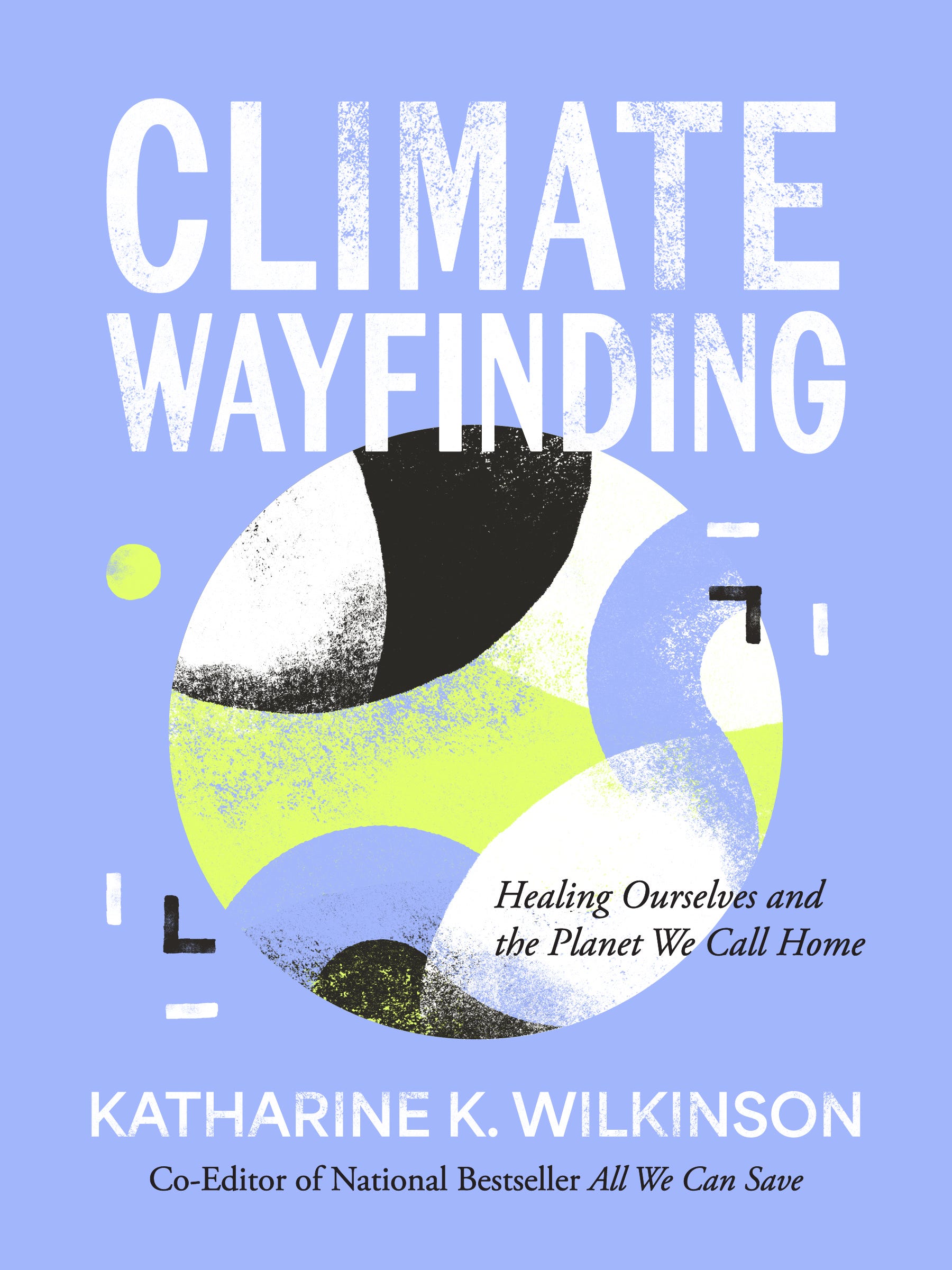
Katharine’s book, by contrast, packages the process behind her nonprofit All We Can Save Project’s Climate Wayfinding program (facilitated hundreds of times in person) into book form, since demand outstripped their capacity. She calls climate wayfinding “the lifelong navigational process that we are called into as our beloved home planet trembles with loss and change, and still so much possibility.” Full of inspirational essays, journaling, and meditation exercises, it resembles The Artist’s Way, but for the climate movement. All We Can Save also provides instructions for facilitated group experiences via the book’s tools, and even offers monthly check in calls for anyone using the book as a tool to gather with others, where they answer questions and tweak processes in real time.
Both books share a core principle: you can’t sustain action disconnected from who you are. Katharine’s book is clearly action focused throughout, and although Thomas’s book is more therapeutic in nature, aimed at helping readers with climate’s core burden of death anxiety, it positions action as a central component of any kind of effective coping. They each tell us that climate action must be rooted in self-knowledge before strategy: a crucial but often overlooked insight.
Surviving Climate Anxiety approaches this through Environmental Identity, a concept from social and environmental psychology describing how people see themselves in relation to nature. Thomas argues it deserves the same attention as gender, racial, or sexual identity, and offers exercises like drawing your eco-timeline, telling your eco-story, and mapping your eco-family tree.
“We have an environmental identity that’s been forming our whole lives... and what our responsibilities are,” Thomas told me. Though universally relatable once named, this identity usually goes unspoken, leaving people without language to work from. “It’s a gift,” he said, “especially for young people... they can take a more active role in actually owning and crafting their environmental identity.”
Climate Wayfinding pursues a similar goal through its own resources: a quiz on eight dynamics of climate engagement, guided meditations on climate emotions and sources of joy, and visioning exercises for a future anchored in meaningful action. Katharine sees “generous questions” as her book’s most powerful tool — a curated sequence for freewriting and discussion built on three principles: looking inward with care (emotions, values, strengths), looking outward with curiosity (solutions, community), and looking forward with courage (vision, action steps).
“There’s something about the way those questions... create that sort of inward, outward, inward, outward... motion, that they end up helping us discover what is it that we’re telling ourselves when we’re telling ourselves the truth,” Katharine said. That exploration, paired with mapping exercises and compass diagrams, leads participants toward something new worth synthesizing.
I invited both authors onto Unthinkable for a conversation about environmental identity-centered wayfinding, which took us to probing the vanguard of climate psychology’s next steps. An edited excerpt follows.
Britt: Katharine, in your book you quote Indigenous teacher and author Sherri Mitchell who says “our most powerful activism is to become fully ourselves in deep connection to our heart-based wisdom and divine knowing – and to harmonize our being with the rest of life. The first step on that journey is coming to know the truth of who you are and allowing that to shine unabashedly.” How would a young person who is looking to be of use yet is daunted by the future they’re inheriting, identify when they’ve come to know the truth of who they are, so they can apply that to the most powerful form of activism they can contribute with? What does it actually feel like in the body to arrive at that kind of self-knowledge?
Katharine: I think Sherri’s language is less suggestive of an ongoing process, but I think that is the reality. It’s about introspection and intuition honing. But it's not only that process. We're not the only agents in it. The world is working on us at the same time as we are working to move in those kinds of increasingly true and attuned ways. So I think part of it too is being open to that interplay, that it's not only up to us. We have helpers, both in the form of other humans, but in lots of other ways as well. The framework of power and joy, where we guide participants to identify what their superpowers are and what fills them with joy in an embodied way, is my best approximation of what it feels like to be moving in alignment with life force. I think when we feel that a somatic indication of “yes, this is heading in that true north direction”, then that is also when that sense of interplay appears. I'm not just agenting this myself, right? There's actually a pull, and there's a collaboration with life, that's happening as well.
Though, probably if I had told that to my 16-year-old self she would've been like, "What?"
I can remember viscerally having this desire at different stages of educational and early professional crossroads of just being like, "Who's got the answer out there that they're not giving me? Who can I talk to that can give me the right answer for me?” And the truth is that no one can give you that answer except you. And it may be a whole series of partial answers.
Britt: Thomas, I would love to hear any thoughts you have on how a young person would know when they've really arrived in an authentic self-knowing around their environmental identity and their orientation to the crisis.
Thomas: Well, the term I use in my book, which is inspired by Maori Indigenous knowledge and beliefs, is the idea of a standing place: when you realize you've got a place that you love on the planet, a place that you want to protect, where it makes sense for you to take action. That can shift and we can have multiple standing places. And we kind of know it. We know it when it happens.
Part of what we need going forward is that we need to help everyone, including young people realize that we're dealing with a longer, harder problem than we might have thought 20 years ago regarding climate change. There's a loss of innocence that we're gonna fix this. We could have. We all know that we have the technology and the science, and we could have dealt with these issues 20, 30, 40 years ago effectively, but because of oppression, essentially power, fossil fuel policies that we're dealing with, we’re climate hostages.
Even if I'm privileged in many ways, I'm still a hostage. Even though I'm privileged, my prosperous town can become a sacrifice zone. So realizing that's part of the story now, that's why the Indigenous work is so powerful because it's real in the sense that it gives a model of kinship to nature that is real. We are part of nature. But it's also instructive in terms of cultural survival in the face of overwhelming odds.
So I think it's that work in the face of overwhelming odds that is being modeled in both my work and Katharine’s. I think that's what people need, they need permission to know they can do it. This is not going to make you disappear if you if you get into this area.
Britt: Things have been shifting over the last 10 years as climate psychology has gained prominence. For example, climate scientists are increasingly opening up about their emotions without fear that it will completely discredit the objectivity of their work. What do you think the new vanguard will be for institutional change and cultural emergence as we continue to advance this work at the nexus of climate and inner and outer life, 5 years from now?
Say you’re in a house fire or a building fire, and you’re dealing with grief and loss and surprise. I never thought this could happen…Should you stop and then have a focus group in the burning house? Or should you get out of the house?
Thomas: This is top of mind for me, I've been thinking about this. As someone who did a lot to validate the idea of eco-anxiety or eco-grief, we need to move on from eco-anxiety. It's very fraught because a lot of people are really invested in the polycrisis and eco-grief and eco-anxiety. But if you've been dealing with a problem that you've known about for 20 years, is anxiety the right term to be using? What would be the emotional response that's adequate to something that we've been engaged in for a while, that we've been living through. So being careful about even using terms like polycrisis too because that only tells at best half the story. Yes, there are obviously many, many crises in the world, but for each crisis there are many solutions. So now that we've validated this and made it okay to talk about, how do we move forward with other ways? Because I think eco-anxiety and eco-grief are really doorways. They're the beginning. They're not the end of the process.
Say you're in a house fire or a building fire, and you're dealing with grief and loss and surprise. I never thought this could happen. This is destroying my sense of meaning. I'm grieving about the loss of my house. Should you stop and then have a focus group in the burning house? Or should you get out of the house? It’s not that I think we should eliminate eco-anxiety because there's still people coming into this, so we have to keep taking care of people. But what do we do with the people that have already moved through this and need the next thing?
Britt: There’s a lot of wisdom in that.
Katharine: I think that there is an increasingly emergent spiritual edge of the work that has always been there in pockets and peripheries, but has not been as central to the work. I think part of that is very related to the Plum Village -Global Optimism partnership*. My own academic background is at the intersection of religion and environment, and when we think about histories of other social movements, that spiritual gap in much of this movement is just so striking. The challenges of the work and the challenges of climate impacts playing out are going to demand of us that we center that. Not as a “oh it’s nice to have if we get to it” thing, “you can talk about that over there while we get to the real business over here.” I think it will have to be more centered and woven throughout.
Britt: I very much agree.
I invite you to check out both Thomas and Katharine’s latest books, Surviving Climate Anxiety and Climate Wayfinding, that are each so generous in how they help the reader manage their emotions, understand and shape their environmental identity, as well as find their authentic role to play in the movement, no matter how foreboding the time.
I’m grateful to Thomas and Katharine for this conversation.
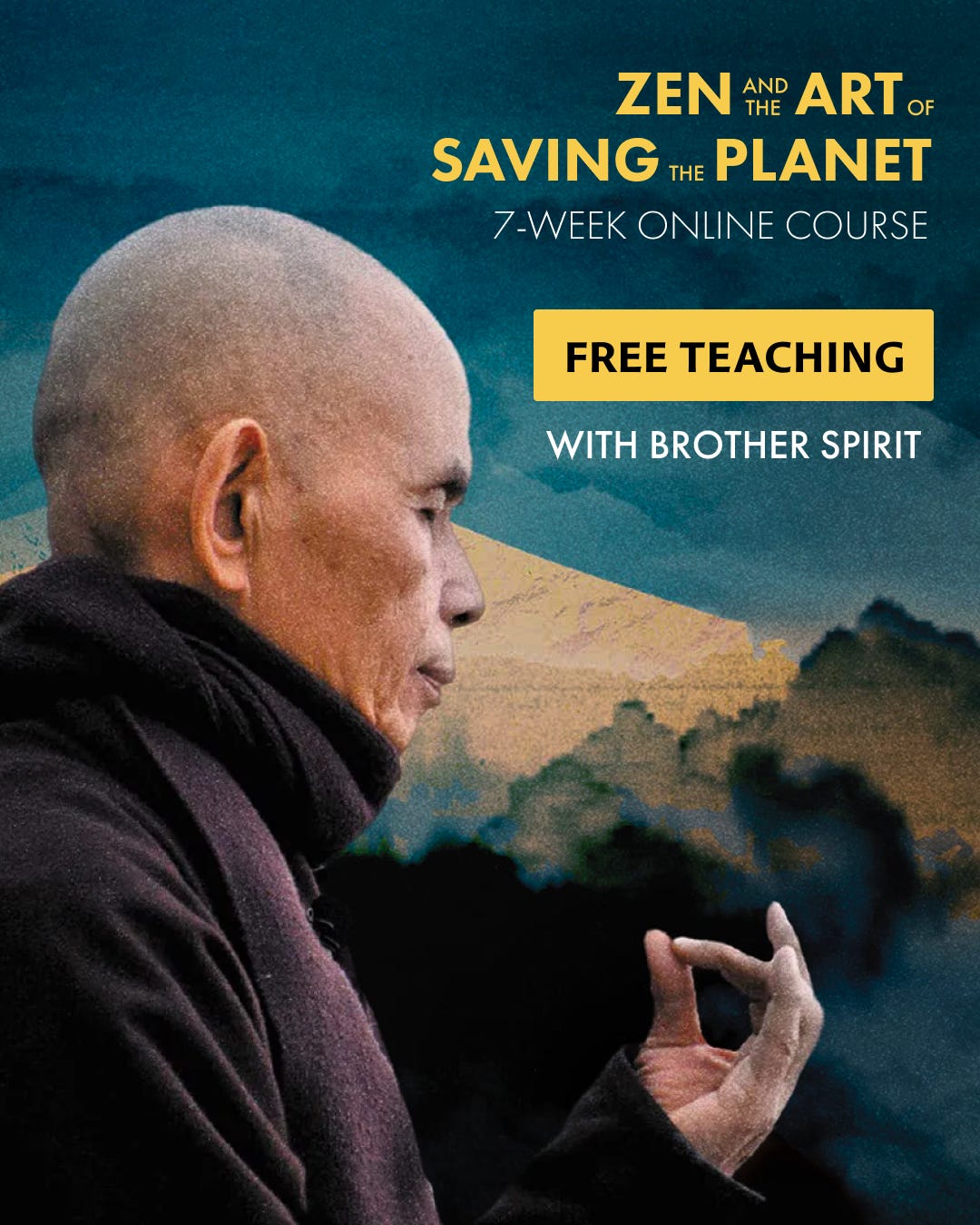
The monastics of Plum Village, Thich Nhat Hanh’s Zen lineage of engaged Buddhism, offer a 7-week online course to support you with navigating the fear, grief, overwhelm, and burnout in response to climate change. I’ve experienced their teachings and practices directly, and it has been life changing and profoundly healing. I’d recommend their amazing online course, Zen and the Art of Saving the Planet (ZASP), to nurture insight, compassion, community, and mindful action in service of the Earth. If you’re curious you can sign up for a free teaching video here. The next course cohort will run from 18th Oct - 6th Dec 2026, and you can sign up now via plumvillage.org/zasp.
Beyond Ecological Grief Podcast Update
Also, I’m happy to share that episodes 1-5 of Beyond Ecological Grief, the podcast I contribute to as its resident climate psychology researcher, are now out.
Episode 4 is a deeply moving episode about parenting and bargaining in the climate crisis where many personal stories are shared (including mine), and Episode 5 is about the stage of depression that comes after disaster as told through the devastation of BC’s Lytton Fire. Listen here.
Big thanks to you, dear reader, for being here.
In community,
Britt
Wow! Heard about Climate Wayfinding before, from the What If We Get It Right podcast, but didnt end up finding it to read -- will now :) Thanks for this conversation, it can feel very lonely to experience these complicated griefs/emotions, and feel deeply for a personally important place (or as Thomas describes, a standing place) and not know what to do about it, so I appreciate this openess.
Thank you for this wonderful cross-pollination, Britt! You are, as ever, so adept at seeing the through lines.